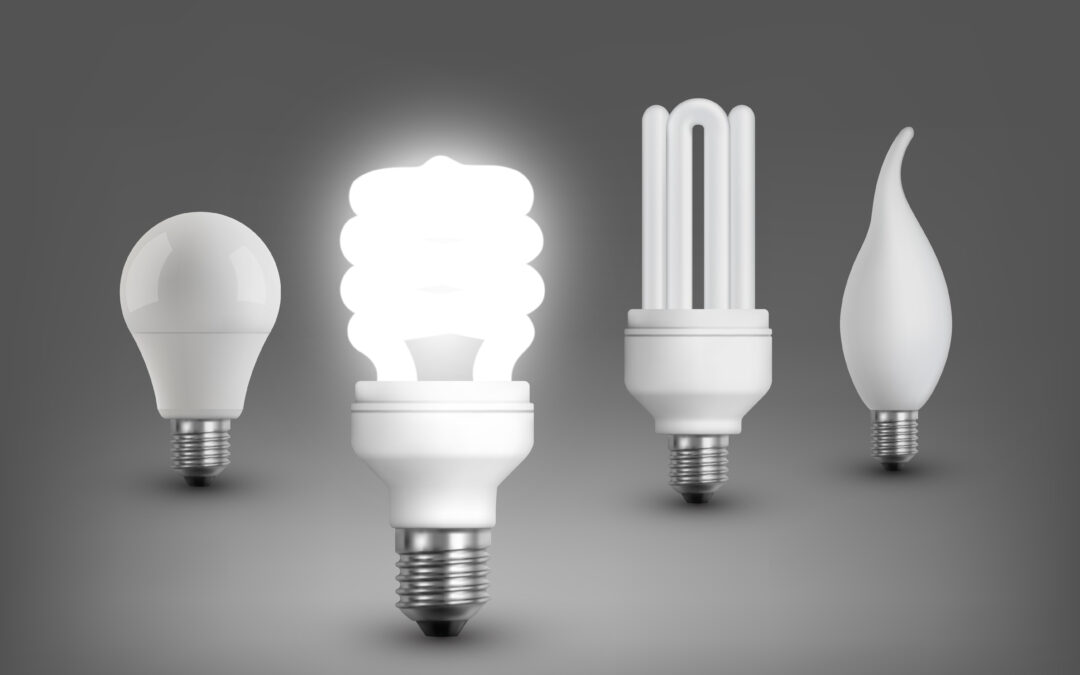
If you're thinking of changing the light bulbs in your home but don't know which ones to choose, this article is for you. LED light bulbs are the ‘most efficient lighting technology’, allowing you to save on your bills at the end of the month.
‘The term LED stands for Light Emitting Diode. A long name that tries to summarise the workings of this lamp, which is actually quite simple. Unlike ordinary light bulbs, LED bulbs don't have a filament, which makes them last longer because they don't produce as much heat. Instead, when the electric current reaches the bulb, it passes through an LED strip, which spreads the energy it receives in the form of visible light,’ explains the credit product comparison platform.
What are the advantages? ‘Less cost and more durability,’ says ComparaJá, highlighting the following five aspects:
LED bulbs consume 80 per cent less than traditional bulbs - ‘The main advantage of LED lamps is the reduction in energy consumption. What is often not so obvious is the difference compared to traditional lighting solutions: LED bulbs can represent energy savings of up to 80 per cent compared to traditional bulbs.’
LED bulbs can last 25 years - ‘LED bulbs have a lifespan of up to 50,000 hours, or 25 years, if they run for about 5 hours a day and maintain their intensity even if you switch them on and off many times. By way of comparison, incandescent bulbs have a lifespan of 1,000 hours, halogen bulbs between 2,000 and 4,000 hours, fluorescent and energy-saving bulbs between 5,000 and 8,000 hours.’
LED lamps do not emit heat - ‘Have you ever felt the need to switch off the lights on hot days to cool down the house? Have you ever burnt yourself changing a hot light bulb? None of these problems arise with LED bulbs, which don't emit heat.’
LED technology allows you to choose the colour and intensity of the light– ‘Another of the main advantages of LED bulbs is their versatility in terms of colour and light intensity. Most uses in the home require between 700 and 800 lumens, such as studying, working or cooking. However, for intense light, you may need more than 1,000 lumens. For lighter lighting, around 300 lumens will suffice.’
LED lamps are good for the environment – ‘A more energy-efficient product will always be better for the environment. But what often goes unnoticed when choosing traditional bulbs is the emission of ultraviolet and infrared light, something that doesn't happen with LED bulbs. In this way, risks to both human health and the environment are avoided.’
Do you want to make your home a happier place? You've come to the right article. Here are nine tips to boost your home's lighting. Read on.
Pay attention to distribution A house with lots of walls and isolated spaces prevents natural light from being distributed throughout the space. Therefore, if possible, the ideal is to knock down walls and opt for open-plan floors.
Choose large windows and more of them Installing large windows allows the sun's rays to penetrate further into the house. The more light the house has, the better. In general, it is recommended that windows occupy an area equivalent to 10-20% of the room's surface. For example: a room of 10m² should have windows of between 1m² and 2m². In addition, it is always advisable to place more than one window, ideally at least two.
Go for white
When your home doesn't have enough natural light, you should opt for light decor: paint the walls white, use pastel fabrics or choose light-coloured floors. All this will help to give a feeling of spaciousness and multiply the light.
Installing light tunnels
The question arises: what are light tunnels? They are tubes that direct light from the roof into the interior of the house. Their main advantage is that they illuminate all day and are ideal when there isn't much wall space. They can be installed anywhere where there is 6 metres or less between the roof and the ceiling - halls, kitchens, bathrooms, bedrooms, offices and places where a window cannot be installed.
Use reflected light
The amount of natural light decreases as you move away from the window. You can calculate this by measuring the height to the top of the window and multiplying by two above the ground. If the opposite wall is too far away from this line, you should look for alternatives to multiply the light in the room. Reflected light is an interesting option for roof windows. Twice as much light enters and improves luminosity.
Installing white window frames White frames inside the house make the light reflect deeper into the room. A big advantage over dark ones.
Hanging mirrors on the walls Mirrors reflect light and deceive the eye - near windows they can multiply the sensation of light and space.
Replace the walls with glass Replacing brick walls with glass is a good solution for creating rooms without hindering light. Latticework is very fashionable these days and gives a very modern touch. Consider them, for example, for the kitchen or even the master bedroom.
Think carefully about artificial light There are times when, no matter how hard we try, these tricks won't be enough to multiply the light in a house. Artificial light therefore becomes the only alternative. Choose where the different points of light go, the intensity and play around with the options available to achieve the desired effect.
Electricity consumption grew by 7.1 per cent year-on-year in April, with renewable energy supplying more than half of consumption. Hydroelectric productivity remained well below normal.
Electricity consumption in April grew by 7.1 per cent compared to the same month in 2021, with more than half of the supply coming from renewable energy (54 per cent). Non-renewable energy accounted for 27 per cent of production, while the remaining 19 per cent was supplied by imported energy, REN's latest balance sheet shows. Correcting for the effects of temperature and the number of days, consumption nevertheless rose by 5.5 per cent.
The company emphasises that last month ‘the hydroelectric regime remained dry’. The inflows were less than half ‘the normal values for this time of year’, namely an index of 0.49, which compares with the historical average of 1. In fact, the suspension imposed by the previous government on electricity generation in five dams on 1 February is still in force, at a time when the low levels of water in the reservoirs began to cause concern.
On the other hand, the wind and photovoltaic regimes ‘were more favourable’, points out REN, both slightly above the historical average.
Analysing the period from January to April, electricity consumption in Portugal grew by 2.6% year-on-year, or 3.2% when correcting for temperature and working days. In these four months, the hydroelectric productivity index was 0.34, which compares with a historical average of 1. Wind productivity was 0.96, while solar productivity was 1.06, both also with historical averages of 1.
According to REN, in this four-month period, renewable production supplied half of Portugal's electricity consumption, broken down into 28 per cent wind, 12 per cent hydroelectric, 6 per cent biomass and 4 per cent photovoltaic. REN emphasises that although the latter is still ‘the least representative technology’, it continues to show ‘very high growth’, 73% compared to the same period in 2021, with daily peaks above 1,200 MW (megawatts).
During this period, natural gas supplied 30 per cent of consumption and the remaining 20 per cent corresponded to the ‘import balance’, notes REN.
Analysing the natural gas market, supply in April was almost entirely provided by the Sines Liquefied Natural Gas (LNG) terminal. Specifically, six methane ships docked in the country, transporting 5,041 GWh (gigawatt hours) of energy. Almost 56 per cent of this figure came from imports from Nigeria, while almost 44 per cent came from the USA.
Não atracou nenhum navio com origem na Rússia, de acordo com dados recolhidos pelo ECO no data hub da REN.
LNG terminal balance (inputs):
Fonte: REN
According to the company, "in the natural gas market, there was a year-on-year contraction of 19 per cent in April, with declines both in the conventional segment (down 21 per cent), in line with previous months, and in the electricity generation segment (down 16 per cent), in the latter case going against the trend of recent months.’
Exports through the interconnection with Spain continued in April, ‘which this month accounted for around 8 per cent of national consumption’, the company emphasises.
Between January and April, accumulated natural gas consumption fell by 0.5 per cent. The 66 per cent growth in the electricity production segment was not enough to offset the 23 per cent drop in the conventional segment.
Portugal and Spain had proposed setting the price for gas in electricity production at 30 euros per MWh, but the European Commission has determined that the ceiling is 40 euros.
Brussels has given the green light to the Iberian proposal to limit the price of natural gas used to produce electricity. However, the initial price set by the European Commission is 40 euros per MWh, whereas the two countries had proposed 30 euros per MWh.
The announcement was made on Tuesday by the Minister for the Environment, Duarte Cordeiro, and the Spanish Minister for the Ecological Transition, Teresa Ribera, at a press conference in Brussels. The measure should take effect in May.
‘Today Portugal and Spain reached a political agreement with the European Commission after very intense weeks of work, which required very difficult technical work, but which has allowed us to make very significant progress today and reach a very satisfactory result,’ said Duarte Cordeiro.
The agreement, he explained, consists of the creation of a temporary mechanism that allows the price of electricity in the Iberian Peninsula to be decoupled from the price of gas. The mechanism ‘makes it possible to defend consumers who were exposed to the market,’ added the minister.
The mechanism will last 12 months, during which an average gas price of 50 MWh will be set, but it will start at 40 euros. Over the course of the 12 months, it will rise to 50 euros. The price is currently around 90 euros per MWh.
According to published but unofficial information, the initial Iberian proposal was for a lower ceiling of 30 euros per MWhour, which would result in a wholesale market price of 110 to 120 euros per MWhour. But European negotiations resulted in a higher limit, which will still guarantee savings on electricity purchases on the spot market - market prices with CO2 will be around 140 euros per MW hour compared to average market prices of 200 euros per MW hour.
It remains to be seen specifically how the revenues will be shared between sellers and buyers in order to avoid creating a tariff deficit, whether there will be compensation for gas-fired power stations that will be paid at the expense of the gains from renewables, and what savings the new model will make for consumers on both sides of the border. At the beginning of April, the presidents of several companies in the sector sent a letter to Brussels in which they warned that the proposal is more favourable for Spanish consumers than for Portuguese ones, and that they may even end up paying more.
‘All consumers will benefit and none will be harmed and the consumers who are exposed and will benefit from this mechanism will also be the ones who will bear the cost of the mechanism,’ said Duarte Cordeiro, explaining that, ’once the mechanism comes into force, all consumers who are exposed will benefit from a reduction in the price of their bill.’
According to the minister, ‘the average gain during this period, if the price of gas remains high, will be very significant’. In recent days it hasn't been gas that has marked the price on the Iberian market, said Duarte Cordeiro.
When questioned by journalists, the Environment Minister also said that Portugal and Spain have alerted the European Commission to the need to ‘rethink’ the price formation, because this mechanism is temporary. ‘It's clear that there is a gap here, or a flaw, which either needs to be corrected in the formation of the price or corrected in the interconnections. There are several aspects that need to be interconnected for the future of price formation in the Iberian market,’ he concluded.
The Spanish minister corroborated that the issue of the ‘very low interconnections’ between the Iberian Peninsula and the rest of Europe ‘is the main restriction on consumers being able to enjoy the advantages of the internal electricity market’, which is why, along with the high level of renewables, the two countries benefit from this temporary exception in the operation of the market.
Teresa Ribera added that the two countries hope that ‘in the next few days’, once the whole procedure has been completed, it will be possible to have the Commission's support so that the mechanism can be implemented ‘immediately’. The formal communication with the European authorities should be finalised by the end of the week. In the case of Spain, the measure could be taken to the Council of Ministers next week and will be materialised in consumer bills in May, said Teresa Ribera. Duarte Cordeiro added that the national timings will be identical, depending on Brussels' ability to respond to the information sent by the two countries.
The Spanish minister also emphasised that the mechanism is designed to ‘strengthen the protection of consumers who have a higher level of exposure to the wholesale electricity market’, both domestic and industrial.