How can you save water to reduce your monthly bill and your ecological footprint? Here are our tips for cutting costs and protecting the environment
One of the best ways to save money in everyday life is undoubtedly by reducing water waste. From showering to cooking, almost all of us use water unnecessarily and without even realizing it.
Small changes in behaviour can make all the difference at the end of the month when the water bill arrives. It's also everyone's responsibility to preserve as much as possible of this increasingly scarce resource on our planet.
Here are some tips to help you learn how to save water at home.
In the bathroom
1. Turn off the tap when you're not using the water
Turning off the tap while you're brushing your teeth or your hair, for example, is something we've always been taught, but not many people do. The truth is that this small gesture, applied daily, at the end of the month can mean significant savings on your monthly bill.
If you don't notice:
If you wash your hands or teeth with the tap running, you can waste around 14 litres of water. If you use a glass, you can reduce this to just 1 litre.
If you keep the tap running while you shave, you can waste up to 40 litres of water. If you put a lid on the sink, you'll only use 2 litres.
2. Opt for the shower
Swap baths for showers. And the quicker the better.
A 15-minute shower with the tap running consumes around 180 litres. But if you turn off the water while soaping up and cut the shower time to 5 minutes, you'll reduce consumption to just 60 litres.
In a bath, water consumption can easily reach 200 litres.
3. Use the water from the shower
Few people use this trick, but believe me, it's one of the most effective for saving water.
While you're waiting for it to heat up, store those good litres of water that would otherwise be wasted. You can then reuse it for flushing the loo, watering the houseplants or even washing small items of clothing by hand. Try it out.
4. Don't use the toilet as a rubbish bin
If you're in the habit of putting rubbish down the toilet, know that every time you flush you're wasting between 7 and 15 litres of water just to get rid of it. When you put your rubbish in the bin, you don't waste any water.
5. Take care of your cistern
With flushing, we can save enough water to significantly reduce the bill at the end of the month.
Firstly, check for leaks. To do this, put some food colouring inside the cistern. If you see coloured water in the toilet without flushing, then there are leaks to deal with.
The next step is to reduce the volume of water that is released with each flush. You can do this by installing a dual-flush cistern or simply placing a full plastic bottle inside the cistern.
6. Install a flow-reducing compressor
Installing a flow reducer on a tap will reduce water wastage by around 50 per cent. If you install one in the shower, you can save up to 80 per cent. If possible, do this for all the taps and showers you have at home, and with this small step you'll save a lot of water.
In the kitchen
7. Pay attention to the machines
In the kitchen, dishwashers and washing machines consume the most water. In this sense, only run the machines when they have a full load. Nowadays, there are also machines with a half-load option.
8. No dripping water
Dripping pipes or taps are one of the main sources of wasted water. A drip may seem minimal, but a tap dripping every 5 seconds for 24 hours can waste 30 litres of water a day, which corresponds to more than 10,000 litres of water a year.
Always keep an eye on your plumbing and taps and try to fix any that aren't working properly.
9. Only use the water you need
When you boil eggs, for example, you don't need to fill the pan with water. Just add enough to cover the food. Otherwise, as well as water, you'll also waste more gas or electricity while you wait for it to boil.
10. Don't defrost food in running water
If you defrost food under running water, think twice before doing so. Not only are you wasting water, but you could also jeopardise your health. Defrosting should not be done under running water, nor should it be done in the microwave or at room temperature, as this encourages the proliferation of bacteria. Instead, you should leave food to defrost in the fridge.
In the garden
11. Don't hose down the leaves
In the garden, water should only be used for washing, not sweeping. Many people use the pressure of the water jet to sweep up leaves and other debris without realising that they are using much more water than they should. For this type of cleaning, use a broom.
12. Water the garden at specific times
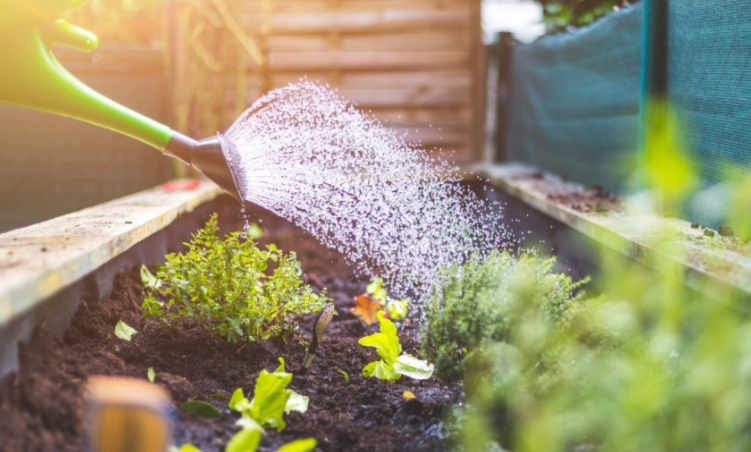
If you water your garden during the hottest hours, some of the water that is being used will evaporate, making it completely unusable. Choose to water your garden first thing in the morning or at the end of the day. Also remember that you don't need large amounts of water, as plants are not able to absorb it all at once.
13. Save money when you wash your car
Don't wash your car with a hose. This not only wastes water but also leaves the car badly washed. A bucket of water, a sponge and some soap will save water and wash the car better, even if you fill the bucket several times.
If you wash your car with a hose, you can waste around 500 litres of water. If you wash it with a bucket and sponge, you'll reduce your water consumption to 50 litres.
14. Reuse water for watering plants
If you've just used some water to boil some vegetables or eggs, this water is perfectly fine for watering plants. In fact, by boiling the water, you've purified it, so the plants will thank you. Make sure, however, that you let the water cool down so as not to cook the plants.
Now that you know how to save water, all that's left is to put it into practice!
The average price of electricity on the Iberian wholesale market has exceeded 500 euros per megawatt-hour (MWh), according to data from the Iberian Electricity Market Operator (OMIE). Although consumers can't control these increases, there are some day-to-day actions that can mean savings on your electricity bill.
“Há bastantes ações que os consumidores podem colocar em prática individualmente nas suas habitações que fazem toda a diferença nos custos das suas faturas de energia”, diz a Selectra, uma empresa de comparação de tarifas de luz e gás.
Where to start? Selectra has put together a set of five tips that can be useful for saving electricity at home. Take note:
The heating must be at an even temperature- ‘If you're in the habit of switching on the heating as soon as you get home at the end of the day, there's a trick that can help you use your energy efficiently! By programming the thermostat for an average temperature of 21ºC, you can not only create a very pleasant atmosphere in each room, but also pay much less for your bills, unlike what you'll have to pay if you opt for higher temperatures.’
Isolate any air leaks in your home – ‘This is one of the most common problems in Portuguese homes, the lack of good insulation that ends up being responsible for the high energy bills of these consumers. This is because the heat generated by the electrical appliances ends up escaping quickly through the air leaks in the windows, forcing the heaters to be switched on for much longer than necessary to achieve the desired room temperature.’
Switch off the thermostat at night – ‘Before going to bed, switch off the thermostat and give the electric heating a rest too. However, if your home tends to be really cold, what Selectra recommends is that you set your thermostat to around 15ºC during the night. This way you'll be able to preserve heat and also reduce consumption compared to higher temperatures.’
Heaters with fewer watts are more economical – ‘First of all, you should bear in mind that prices will vary according to the tariff you have contracted and the power of each electrical appliance. But one thing is certain: the higher the power of the appliance (W) and the temperature for which you programme it, the more you will have to pay for its use.’
Pay attention to the discounts offered by commercialisation companies – ‘At the beginning of the year, several suppliers updated the conditions of their tariffs and many of them even announced that their prices were going up. However, each company is responsible for deciding its own tariffs and discounts, so prices end up being different for all of them. You should therefore carry out a market study or contact a company specialising in this type of service to find out which offer is the most advantageous for you.’
Hydroelectric power produced just 876 GWh of electricity in the first 50 days of this year, which is 2,390 GWh less than in the same period in 2021 and below the 900 GWh generated in 2018.
Electricity production in mainland Portugal fell by 26.2 per cent in the first 50 days of this year, compared to the same period in 2021. This is the worst 50-day period in nearly a decade, and is due above all to the drop in hydroelectric generation, which fell by 73.2 per cent, according to the Portuguese daily Jornal de Notícias.
Desde o início do ano e até 19 de fevereiro, o sistema eletroprodutor gerou 6.217 gigawatts-hora (GWh) de eletricidade, o que contrasta com os 8.426 GWh produzidos em igual período do ano passado. Com mais de 90% do território nacional em seca severa ou extrema, a energia hidroelétrica foi a que mais se ressentiu, tendo produzido apenas 876 GWh em 50 dias, isto é, menos 2.390 GWh face a igual período de 2021 e abaixo dos 900 GWh gerados em 2018.
A energia produzida através de fontes renováveis sofre, deste modo, uma queda de 44,3%, devido ao decréscimo da produção de origem hídrica e da diminuição da energia eólica (caiu 23,3%). Trata-se do pior ano para as energias renováveis nos dez anos analisados, segundo a análise do mesmo jornal.
The annual rate of energy inflation in the European Union set a new record and reached 27 per cent in January 2022. Portugal was at the bottom of the table, with a variation of 12 per cent.
A taxa anual de inflação da energia na União Europeia bateu um novo recorde e atingiu 27% em janeiro de 2022, mantendo a tendência ascendente que já se registava desde março de 2021, de acordo com os dados mais recentes publicados pelo Eurostat. Depois de Malta (0%), Portugal foi um dos países com menor taxa de inflação energética (12%), tal como a Croácia.
This 27% peak recorded in the EU is the highest ever since the Harmonised Index of Consumer Prices (HICP) was first published in 1997. In October 2021, it had surpassed the highest point recorded so far: 17 per cent in July 2008.
Olhando para a evolução dos preços dos diferentes tipos de energia (eletricidade, gás e combustíveis), o Eurostat mostra que em janeiro de 2002 foi o gás que atingiu o seu ponto mais alto, com quase 41%, um aumento de 13,5 pontos percentuais (pp) face ao mês anterior, significativamente acima de outras fontes de energia.
Fuels (including petrol, diesel, fuel and other fuels) increased by 26% (-2.8 pp) and electricity by 24% (+3.1 pp).
Entre os Estados-Membros, a Bélgica (67%) e os Países Baixos (58%) registaram as maiores taxas de inflação energética em janeiro de 2022, seguidos pela Lituânia (43%), Estónia (41%) e Grécia (40%). No extremo oposto da tabela, a taxa de inflação energética foi de 0% em Malta, seguindo-se a Croácia e Portugal, ambos com 12%.
A taxa mais baixa de inflação na energia nos últimos cinco anos registou-se em maio de 2020 (-11%). Depois, começou a aumentar, mas continuou a apresentar taxas negativas até fevereiro de 2021, variando entre -9% e -1%. A partir de março de 2021, a inflação energética passou então a positiva e aumentou quase continuamente, atingindo 26% em novembro de 2021 e 27% em janeiro de 2022.
Also during the COVID-19 pandemic, inflation rates for fuels were more volatile than for electricity and gas. Gas and electricity inflation rates reached negative values between April and December 2020, but were more stable, with averages of -5% for gas and -1% for electricity.
Fuel, however, hit a low point in May 2020 (-21%) and reached a maximum peak of +37% in November 2021.