Jantar de Natal Corporativo

Corporate Christmas Dinner

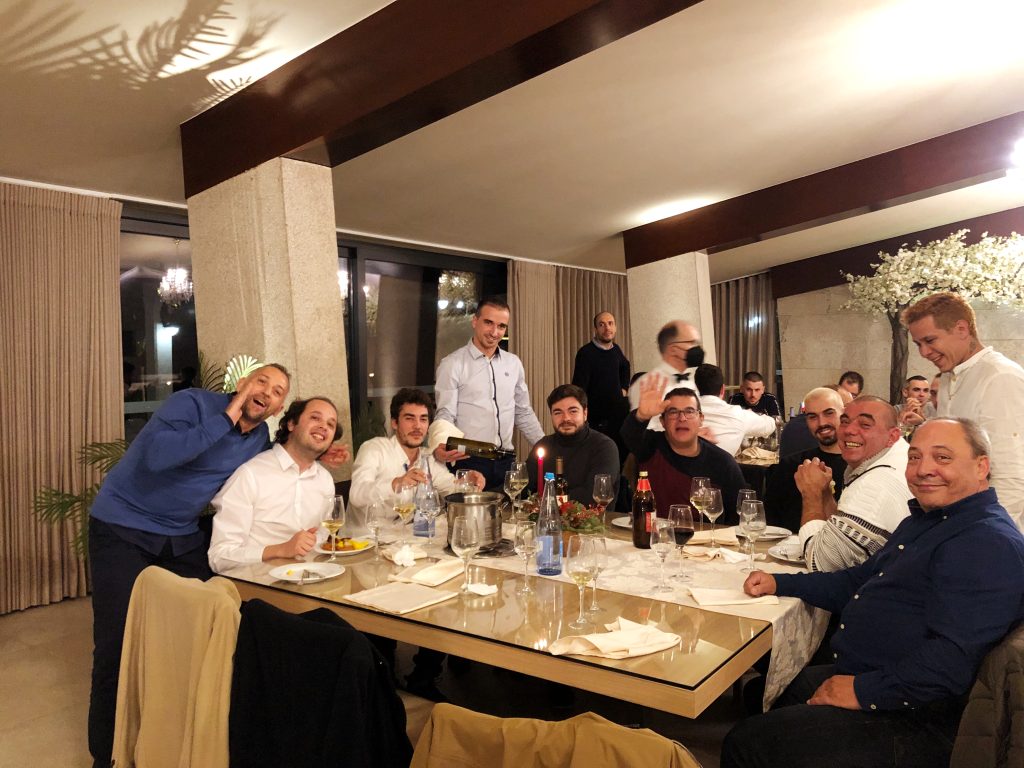
The IMEG Group's Christmas dinner was held last Saturday, December 18th. It was a moment of celebration, conviviality, sharing, smiles, joy and lots and lots of entertainment.

We cherish those who are with us and so it was also time to thank all those who accompany us. We are aware that not every day is easy, but that they, our people, work hard and always give their best. They are and give their all for IMEG.

For these and other reasons, bringing our teams together for this type of event is essential for us, even in a pandemic context. COVID-19 has already taken away many moments of conviviality, many emotions, but this year we will not allow ourselves to be affected or infected. We tested all our employees because their safety, as well as that of their families, is a priority. And a safe party is a happy party.

Thank you to everyone present!

EDP aumenta preços da luz em 2,4% em 2022

EDP increases electricity prices by 2.4% in 2022

The update, from January 1, translates into an average change of 90 cents per month in household electricity bills.

EDP Comercial's electricity tariffs will rise by an average of 2.4% in 2022, which corresponds to an increase in household bills of around 90 cents per month, reflecting the rise in energy costs.

“EDP Comercial will make an average update of 2.4%, in line with the regulated market, as of January 1st. This update translates into an average variation of 90 cents per month,” the president of EDP Comercial, Vera Pinto Pereira, told Lusa, noting that this increase comes ‘in the context of a significant rise in energy prices on the wholesale market’.

The intention is to maintain the tariffs “throughout the whole of 2022”, said the manager, stressing that “EDP Comercial is thus continuing the strategy of price stability that allowed it to keep customer prices unchanged even in 2021, when the energy market reached record values”.

EDP Comercial is the main operator in the free electricity market, with a market share of 74.3% in terms of number of customers and 41.7% in terms of consumption supplied, according to the latest figures released by the regulator for June.

Read more
O frio já se começa a sentir em casa? Saiba como poupar na fatura da luz

Is it getting cold in the house? Find out how to save on your energy bills

With the days getting colder and many Portuguese still teleworking, it's becoming necessary to turn on the heaters at home, which are real energy guzzlers. Find out how to save.

With winter approaching, the colder temperatures are already starting to be felt, especially at home. For those who telework, this is even more evident, as Portugal is ranked as the 4th country in the European Union with the worst thermal insulation conditions, according to Eurostat.

In the same analysis, 20% of Portuguese admit that they are unable to heat their homes in winter and that they have great difficulty paying their electricity bills during the coldest months of the year.

With this in mind, Selectra, the electricity and gas tariff comparison company, has put together some tips for increasing energy efficiency in homes, so that you can face the colder temperatures without your electricity bill skyrocketing.

  1. Maintain an even temperature throughout the house, around 21ºC. To do this, you should avoid turning on electric heaters at very high temperatures and always set the thermostat to the same temperature. In this way, you'll save money and make efficient use of energy.
  2. Invest in double glazing. Most air leaks occur through the windows. It is therefore recommended that, before buying any appliances to heat the house, you invest in double glazing for the windows to ensure that no heat is lost.
  3. Turn the thermostat down or off at night. In this case, the idea is to give the heater a rest when you go to sleep, as well as when you're not at home. However, if you find that the house cools down very quickly if you don't have a heater on, instead of turning it off, lower its temperature to 15 ºC. This way, you maintain the temperature but reduce consumption.
  4. Put timers on electrical sockets. For those who have a bi-hourly energy tariff, this tip can be useful as it allows you to program your heaters to run only during off-peak hours (10pm-8pm), where you enjoy cheaper electricity prices. Even so, the tip is also useful for those on a simple tariff, as it doesn't allow the heating to be on for too many hours.
  5. Installation of solar panels. It's another investment that can be worth making, as it will save you money in the long run. Although we have more hours of sunshine during the summer, solar panels are still a good option during the shorter days of winter, because they perform their function just as well and help the bills to balance out, without major increases in the electricity bill.
  6. Contracting dual energy tariffs (electricity and gas). When you contract your electricity and gas services with the same supplier, you tend to get better discounts and better contractual conditions than if you contract the services individually. For this reason, you should consider whether this option is better for your wallet.
  7. Analyze the winter discounts offered by commercial companies. This is because several suppliers, knowing that electricity bills tend to rise during the winter, offer discounts during the colder months. The ideal thing is to analyze these discounts and sign up for the one that best suits your needs, so that you can save money during this season.
View original article
Portugueses gastam em média 751 euros com fatura da luz

Portuguese spend an average of 751 euros on electricity bills

The average annual expenditure on electricity in Portugal was 751 euros per dwelling in 2020, compared to 523 euros in 2010, which represents an increase of 228 euros, according to INE data.

The average annual expenditure on electricity in Portugal was 751 euros per dwelling in 2020, compared to 523 euros in 2010, representing 69.9% of the total spent on energy, the National Statistics Institute (INE) announced.

According to the final results of the Household Energy Consumption Survey (ICESD 2020), electricity expenditure represented 69.9% of the total spent on energy in households, compared to 62.2% in 2010.

INE said that electricity continued to be the main source of energy consumed in housing, reaching a weight of 43.1% in 2020, compared to 42.6% in 2010.


Read more