News
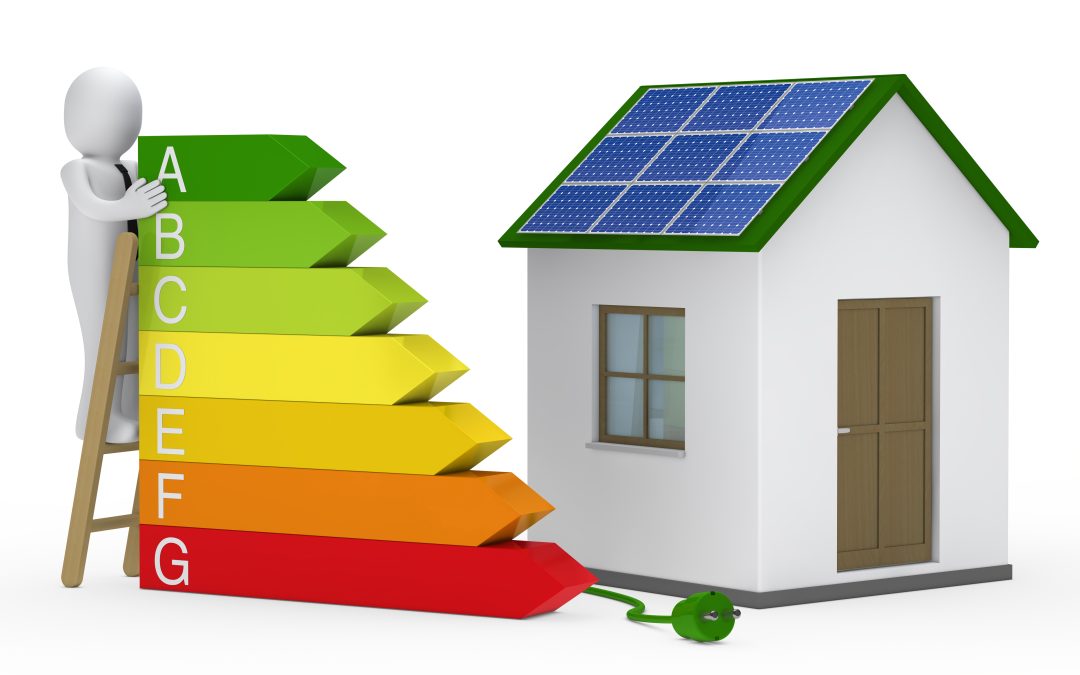
Of the more than 1.56 million certificates issued between 2014 and 2021, 25 per cent correspond to buildings in energy class ‘C’. The class with the best energy performance (‘A+’) totalled just 2.5%, while the worst class (‘F’) accounted for 7.6% of buildings.
According to the data provided by the SCE - Sistema de Certificação Energética dos Edifícios (Energy Certification System for Buildings), the number of certificates issued by energy class since 2014 (data recorded on 10 January 2022) shows that 25% of the certificates issued correspond to buildings in energy class ‘C’. This is followed by class ‘D’ with 21.5 per cent and class ‘E’ with 13 per cent. The class with the best energy performance (‘A+’) totalled just 2.5%, while the worst class (‘F’) accounted for 7.6% of buildings.
From 2014 to 2021, around 1,560,105 certificates were issued, according to the same figures, with 2019 being the year in which the most certificates were issued (212,179). In 2014, 179,990 were issued and, in 2021, 202,364. The majority of certificates were issued in Lisbon (407,310) and Porto (263,351), followed by Setúbal (146,038), Faro (142,492) and Braga (112,998).
As far as residential buildings are concerned, the data shows that 23.3% are classified in class 'D', followed by class 'C' with 22.1% of the certificates. On the other hand, 8.4% of buildings are in the worst energy class ('F') and only 2.8% are classified as having the best energy performance.
As for service buildings, around 46.5% are in class 'C'. Only 1.2% of the certificates belong to class 'F' and only 0.4% are in the best class ('A+').
Note that the energy certificate is a document that assesses the energy efficiency of a property on a scale from 'A+' (very efficient) to 'F' (not very efficient). Currently, this certificate costs between 45 euros (residential) and 950 euros (commercial).
View original article

News
Discover the best solutions to combat the cold in your home without ruining your bank account, whether you live in an apartment or a house.
There's no turning back. If in the summer we don't even remember that it gets cold in winter, as soon as the temperatures start to drop in the fall, the construction of Portuguese houses starts to show signs and we quickly remember that we are among the Europeans who, despite the milder temperatures during the winter, spend the most time indoors. After all, how do you heat your home intelligently, so you don't get cold but don't ruin your bank account? There are several options, which depend, above all, on how you intend to use it and how much you are willing to spend to keep your home warm.
First of all, it's worth looking at the windows and doors: if they let cold in and heat out, you're unlikely to have an efficiently warm home. If this is the case, caulk your windows and doors to minimize air ingress, and also take care of insulating the walls and roofs of your home before making any other investments in air conditioning.
With this problem dealt with, there are several options when it comes to heating.
1. OIL HEATERS AND FAN HEATERS
Whether you live in a house or an apartment, the most immediate choice always seems to be the same: oil heaters or fan heaters. They are the cheapest to buy, easy to transport between rooms and seem to do the job of keeping the house relatively warm - even though they only heat one room or another, take a while to heat up (in the case of oil heaters) and are noisy (in the case of fan heaters).
But although they are often seen as the least expensive alternative, the truth is that energy costs are high and can increase your monthly electricity bill by several hundred euros. If you only turn the appliance on for two hours a night in one room, you won't use much energy, but if the idea is to have several rooms heated throughout the night, the bill will go up a lot, and can reach more than a hundred euros a month.
It's best to do the math and see if it doesn't pay to invest in a more efficient alternative, such as air conditioning: the initial investment may be higher, but the monthly bills will be lower. If you only want to use it occasionally and in a small room, this may still be the best option for you.
2. GAS HEATERS
For those who don't want to make a big initial investment, this type of heater is an alternative to oil heaters: they heat faster, are more powerful and easily heat a room.
The downside is that you have to replace the gas canister when it runs out, but above all there are safety issues: even though more modern appliances are equipped with better safety systems, you still have a gas canister in an enclosed space. The house must be ventilated to avoid high concentrations of carbon monoxide - a gas that has no smell or color but is toxic when concentrated, and can even cause death by inhalation. It is not recommended to use them in bedrooms or anywhere else where people sleep.
Finally, it is not true that these appliances are more economical: the kWh cost of butane gas is higher than that of electricity and the efficiency of this equipment is lower.
3. FIREPLACE, STOVE OR WOOD BURNING STOVE
For those who live in houses, this is probably the cheapest option if you have access to free firewood because you have land with trees. However, the reality for most Portuguese is that they live in apartments in cities or in houses on land without trees.
In this case, you should consider replacing firewood with pellets, a renewable, carbon-neutral biofuel in the form of a pressed pellet made from leftover leaves, sawdust and wood chips. If you have a fireplace, you should pay special attention to the ventilation of your home, as well as the extraction of smoke.
Emissions from fireplaces are highly polluting - for the environment and for your lungs, as you breathe in the particles released by the smoke on a daily basis.
Stoves, in their different versions, are more compact, require less maintenance and have a higher efficiency.
Heat recovery units, on the other hand, retain a greater amount of heat, harnessing between 50 and 70% of the energy, and have low CO2 emissions.
What these three pieces of equipment have in common is the relatively high purchase and installation price.
4. CENTRAL HEATING USING A GAS BOILER
It's the most comfortable option and the one that guarantees you a warmer home, all round, without causing any physical or health discomfort. But the costs are high, not only for installation but also for monthly gas bills, particularly if it's propane or butane gas, which are more expensive - unlike natural gas, which is cheaper than electricity.
The latest models of condensing boilers are very efficient, which leads to savings at the end of the month. However, if they are not installed from scratch (during the construction or reconstruction of the house), installation is complicated.
5. AIR CONDITIONING
Air conditioning is increasingly the heating system of choice for both houses and apartments. It is one of the most efficient systems (up to 6 times more efficient) and can be used all year round, allowing you to control the desired temperature and keep it constant whenever you want. On cold days, it heats up the house very quickly, creating a cozy atmosphere. In summer, it allows you to cool your home effectively and combat the discomfort caused by excessive heat.
Modern air conditioning models don't consume much energy compared to other alternatives and don't pose any health risks, as long as you maintain and clean your air conditioning filter. The only downside is the initial cost: they can be a little more expensive to install than other solutions.
But it's worth doing the math, because the initial investment quickly dissipates and you can gain a lot in comfort and quality of life.
WHAT IS THE BEST CHOICE FOR HEATING THE HOUSE?
The first answer to this question is simple: caulking and/or replacing doors and windows is a prerequisite for any air conditioning system to work as efficiently as possible. Once this step has been taken, it's time to choose the best solution for your home and family.
Doing the math, the most complete, efficient and year-round solution is undoubtedly air conditioning. It's true that, for those who have access to free firewood (especially in houses), stoves are an economical solution; and that central heating is very effective at keeping your home warm. However, only air conditioning can heat and cool your home - which is why it's a year-round appliance - economically and without a big impact on your monthly bill (the biggest investment is in the installation). And it's a heating solution that's suitable for both houses and apartments.
View original article

News
Renewable energy supplied 59% of electricity consumption in Portugal in 2021, of which 26% was wind power, 27% hydroelectric, 7% biomass and 3.5% photovoltaic.
Renewable energy production supplied 59% of electricity consumption in Portugal in 2021, especially wind power, which accounted for 26%, while non-renewable production supplied 31%, according to data from REN, released this Tuesday.
According to REN - Redes Energéticas Nacionais, of the 59% of electricity consumption supplied by renewable energy sources last year, 26% was wind power, 27% hydroelectric, 7% biomass and 3.5% photovoltaic.
In the case of photovoltaic solar energy, although it continued to be the least significant of all renewables, REN highlighted its sharp growth (37%) compared to the previous year.
As for the 31% of electricity consumption supplied by non-renewable energy production in 2021, 29% is coal, with the last plant closed at the end of November (Pego, in Abrantes) accounting for less than 2%.
The remaining 10% corresponds to imports.
Read more
