News
Maintaining a balance between maximum comfort at home and minimum expenditure is a difficult task, but one we return to every year whenever the days and nights get colder
Equipment such as air conditioning is the most efficient climate control system, but there are also several simple and inexpensive tricks you can use to keep your home warmer and cosier when the thermometer drops.
1. ATTENTION TO ISOLATION
To avoid losing thermal efficiency and spending more on energy consumption, your home must be well insulated. Pay attention to the roof, ceiling, walls, floor, windows and doors, as these are the main points to insulate in order to achieve better thermal comfort.
However, good insulation may be out of your budget, so you could opt for more economical solutions instead. Check all your doors and windows thoroughly to see if there are any places where the cold can seep in. For those that remain closed, you can opt for solutions such as caulking tape or insulating adhesive tape and long rolls of wadded fabric, also known as ‘chorizos’.
2. CHOOSE AN EFFECTIVE AND EFFICIENT AIR CONDITIONING SYSTEM
Once you have ensured that your home is effectively insulated, you need to make sure that you have the main ally to keep you warm and cosy inside: heating or air conditioning equipment.
There are various types of equipment to combat the cold. Air conditioning is the most complete and efficient solution, as it can be used all year round to combat both cold and hot spells without excessive energy costs. What's more, it can heat or cool more than one room in the house.
3. CLOSE DOORS AND ROOMS TO KEEP WARM
Cold or hot air is distributed throughout the house and ends up reducing the temperature in the most important rooms. Close doors in areas you don't really need to use, to preserve the heat in the rooms where you spend the most time. And try to make more use of small rooms, which allow you to raise the temperature quickly with air conditioning equipment, and then maintain it better without having to run them constantly.
4. FOLLOW THE MOVEMENT OF THE SUN
The most affordable heater we have at our disposal is the sun, which can ‘charge the batteries’ of people and animals, but also of houses. In this case we're not talking about photovoltaic panels - an investment that also pays off handsomely - but actually letting sunlight heat our home.
Try to open shutters, curtains or blinds wide in the rooms with the most exposure to the sun's rays, and close them tightly when it's dark or the sun is out. This way you heat rooms during the day and keep them cosy for several hours.
5. FREE THE WINDOWS FROM OBSTACLES
Avoid tree branches or bulky plants obstructing your windows, especially if they have evergreen leaves that stay in place over the winter. These are obstacles that prevent the sun's rays from entering your home properly.
6. SPRUCE UP THE HOUSE
The circulation and renewal of air in the home is crucial and can even be an ally in improving thermal comfort. On the one hand, 5 minutes of open doors or windows is enough to renew the air in a house, or 10 minutes if you have smaller windows.
Ideally, cross-ventilation - opening windows at opposite points - generates a current of air throughout the house and speeds up the renovation process. On the other hand, if this is done at a time and place when the sun is beating down, it helps to raise the temperature in those areas, and therefore in the whole house.
7. INDIVIDUAL COMFORT BLANKETS
Who doesn't like curling up in a blanket on the sofa in front of the telly? Always have several blankets on hand, the warmer and fluffier the better. They won't heat the house, but they often bring the comfort we need, especially when we're alone and don't need to walk around the house. If you spend a lot of time at your desk and computer but don't want to switch on a heater, a blanket covering your legs will also increase comfort and no one will notice it in the middle of a work meeting via videoconference.
8. CHOOSE DARK COLOURS
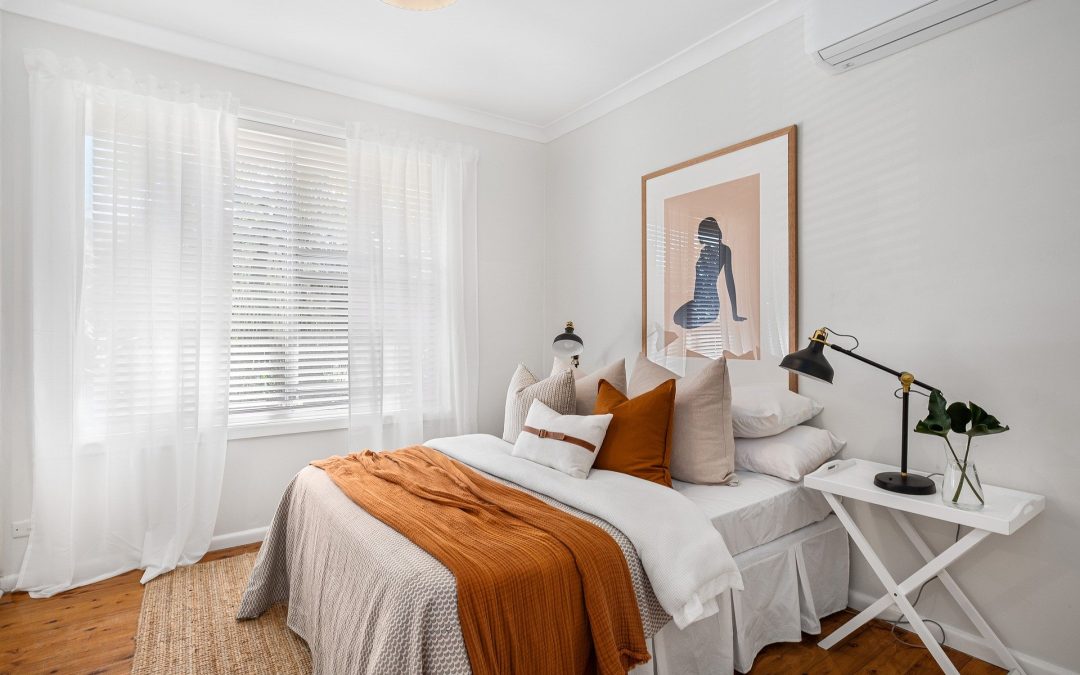
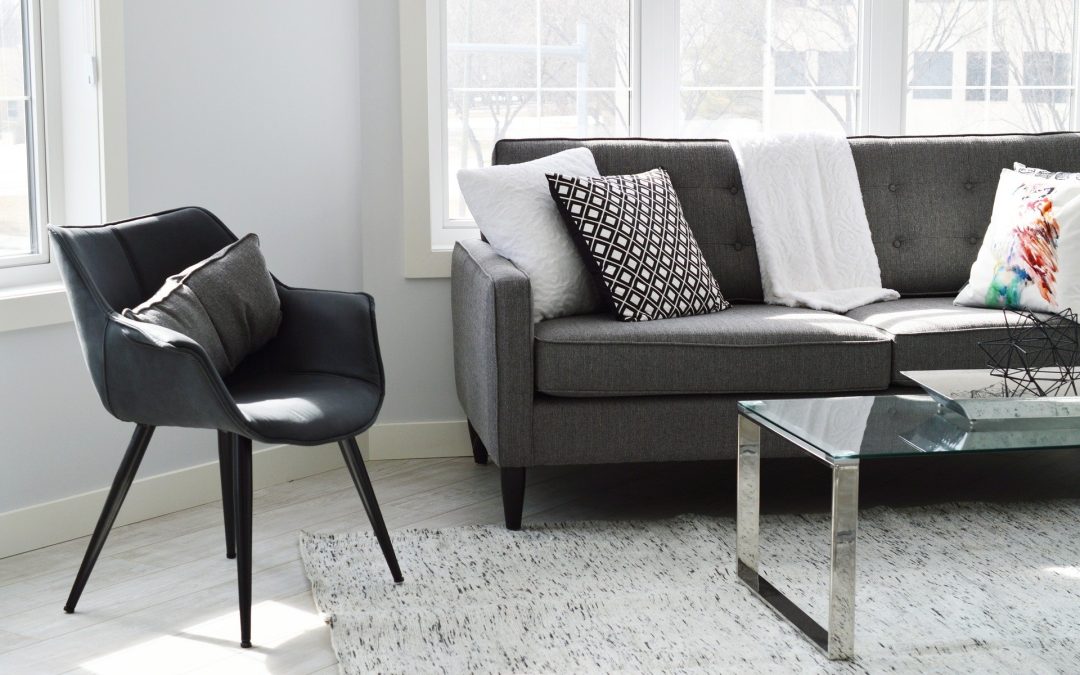
Black and other dark colours attract more heat, helping to maintain the temperature. Changing the curtains in autumn may be a complicated task if you've opted for lighter colours when decorating your home, but changing the cushion covers - or even the sofa, if possible - to darker shades will increase the thermal comfort of the room.
9. USE CANDLES, BUT CAREFULLY
There are colourful, aromatic candles in different sizes and shapes, and with varying levels of durability. Scatter them around your home to create a more cosy, even romantic atmosphere, providing a light and more localised source of warmth. However, be careful where you place the candles, away from flammable materials, and don't forget to blow them out when you leave or go to bed.
10. BET ON CARPETS
The simple minimalist style is effective in terms of design, but it can create slightly colder environments at home. Thick, fluffy carpets help to reinforce comfort in all types of rooms, especially if the floor is stone or ceramic (wood keeps the temperature better, underfloor heating is more expensive).
11. SPEND MORE TIME IN THE KITCHEN
There are those who don't like the smell of food and those who love the aroma coming from the pots on the cooker or the oven, but one thing everyone appreciates: the warmth of a fully functioning kitchen in winter. This is when meals are more like ‘pot meals’ and ‘oven meals’, which take longer to cook and are served very hot.
Whether it's just a few minutes a day during the week or long hours on Saturdays and Sundays, ditch the food delivery apps and try to cook more in winter. You'll keep warm for as long as you're in the kitchen, raise the temperature of the other rooms a little by distributing the heat, and save money on meal preparation, whether it's soup, a longer roast in the oven or a cake to go with a hot cup of tea. Don't forget to make the most of your oven by cooking as many dishes as possible at the same time.
All these tips help to improve the thermal comfort of your home at almost no cost, and you can return to them every year when the cold starts to set in, even if you invest in efficient air conditioning systems.
These are tricks that both help you withstand the cold in a house without air conditioning and keep your energy bills down when it's running. By following them you're making your life comfortable, but also promoting energy efficiency and sustainability.
View original article

News
Did you know that a well-organised fridge allows you to find food quickly and prevents the door from being left open for too long? In this way, less electricity is consumed to reach the ideal temperature inside, according to the Consumer Protection Agency.
The truth is that a well-organised fridge allows you to find food quickly, preventing the door from being left open for too long. In this way, less electricity is consumed to reach the ideal temperature inside, DECO Proteste emphasises.
So, once you've packed the food, distribute it among the different shelves, taking into account the cold zones. For example, raw meat and fish require lower temperatures than fruit and vegetables.
According to consumer protection, the top shelf should contain yoghurts, cream, cheese, jams and mayonnaise. The middle shelf is where you'll find ham and cold cuts, open tinned food and cakes.
The area above the drawers should hold raw meat, seafood and fish, soup and cooked dishes. As far as the drawers are concerned, you should make room for fresh fruit and vegetables.
The fridge door, on the other hand, is where milk, juice, butter, margarine, drinks and eggs should be kept. It should be emphasised that these should be stored with the thinner end facing downwards and not washed. This is because water destroys the protective film and opens the door to micro-organisms, explains DECO.
Finally, in the freezer, food should be organised logically, according to consumer protection. For example, one drawer for meat and fish, another for vegetables, and so on. Don't forget to identify the food and write down the date it was frozen, so that the oldest food is consumed first.
Food hygiene and preservation
To avoid hygiene and food preservation problems, you should thoroughly clean the fridge and freezer every six months. Simply wash with hot water and dishwashing detergent or, to disinfect the surfaces (better), use vinegar or lemon.
To reduce odours and prevent microbiological contamination that could cause food infections, choose to store food on the shelves in hermetically sealed boxes and bags. Finally, try not to fill the fridge (too much), as the circulation of cold air helps to maintain a good temperature (between 3°C and 5°C).
View original article
News
UNDERFLOOR HEATING: ARE UNDERFLOOR HEATING MORE EFFICIENT?
It's a complex heating system with structural implications, but it guarantees excellent thermal comfort. Clarify all your doubts about underfloor heating.
In a house built from scratch or in a renovation project, the energy efficiency of the heating is a point that can influence all other decisions. Underfloor heating can be one of the most comfortable solutions, but it's also one of the most expensive.
Do you know exactly how underfloor heating works? And in what situations can they be installed? Clear up all your doubts about this system.
WHAT IS UNDERFLOOR HEATING?
Underfloor heating is a complex system of pipes that releases heat and is installed under the floor covering. It usually covers an entire room, or even the whole house, and can be combined with the external covering that best suits the needs of the room in question.
HOW DOES UNDERFLOOR HEATING WORK?
There are two systems on the market: electric and hydraulic. The first is a mesh of electric resistors and can be a suitable solution for the winter, as it only heats. The hydraulic option, which consists of water passing through very thin tubes, can also be convenient in summer. Some systems offer the chance to cool the water as well as heat it.
In any case, the system works with a thermostat - a temperature regulator that allows you to choose the ideal temperature for the room.
WHAT ARE THE ADVANTAGES OF UNDERFLOOR HEATING?
In terms of the feeling of comfort, underfloor heating is far superior to other heating systems: it is laid throughout a room and distributes heat evenly, while radiators and air conditioning systems create hot air spots near appliances.
With underfloor heating, it's not just the surface of the floor that heats up, as the warm air rises and heats the whole space evenly - plus there's not as much heat loss through the ceilings and walls. You'll get the most out of this system if the house in question has good thermal insulation in the doors and windows, with PVC frames of higher energy classes.
Unlike radiators and air conditioning units, underfloor heating doesn't take up any space. It's completely hidden and, what's more, the maintenance that might need to be done is on the machine that feeds the pipes - a gas or pellet boiler, for example. The mesh hidden in the floor is maintenance-free, although hydraulic systems require more maintenance than electrical systems.
WHAT ARE THE DISADVANTAGES?
The disadvantage of underfloor heating is its price. This is a more expensive system than other heating solutions. Despite this, in the case of hydronic underfloor heating, there are greater savings on electricity bills compared to electric ones, since it is enough to have the water circulating at a constant temperature of around 30º - wall radiators have to be at higher temperatures (around 60º), which means more energy. This can mean savings of around 30 per cent.
HOW TO CHOOSE BETWEEN ELECTRIC AND HYDRAULIC UNDERFLOOR HEATING?
Electric underfloor heating can cost less to install than hydronic underfloor heating. What's more, they don't need a kind of engine room (for boilers, tanks or heat pumps) and the heating can be programmed on the thermostat in each room. On the other hand, their operating costs tend to be higher than hydronic systems and this means that they are a better option if they are used occasionally and not in very cold climates.
Hydronic systems also have the advantage of being able to cool the environment when combined with boilers or reversible heat pumps. At this point, however, the effectiveness of this system is not comparable to alternatives such as air conditioning - air conditioning units require less investment, no major interventions are needed, and there are more efficient and environmentally friendly options.
On the other hand, hydronic underfloor heating maintains thermal comfort in winter and, when combined with the right floor covering, is more energy efficient. In summer, underfloor heating has the advantage of also cooling the floor.
WHAT IS THE BEST FLOORING FOR UNDERFLOOR HEATING?
Granite and terracotta tiles are the best coverings to combine with underfloor heating from an energy efficiency point of view. Their high thermal conductivity means that they heat up quickly and retain heat. The same can be said of polished cements, which have good thermal inertia.
It's also possible to use laminates (which include floating floors) and wood with underfloor heating - the thinner these coverings are, the quicker they heat up. In the case of wood, you need to pay attention to the specific properties of each wood: some can block heat.
WHAT IS THE PRICE OF UNDERFLOOR HEATING?
Cost, as we've already seen, is the major disadvantage of underfloor heating. Both installation (which is often time-consuming) and maintenance are expensive. There is no reference price per square metre, there are many factors to take into account: which heating system, which heat-supply system, thermal insulation and even the coils.
CAN IT BE INSTALLED IN ANY ROOM?
Yes, all interiors can have underfloor heating. The system is usually installed throughout the house, from the common areas to the bedrooms.
AND IN EVERY HOUSE?
In theory, yes. Few recent buildings already have underfloor heating and it is easier to install it from scratch. When renovating, you have to bear in mind that installing underfloor heating means raising the floor by at least a centimetre and a half (insulation boards have to be installed under the coils to prevent energy loss). This makes the whole process even more expensive.
Although there are fairly compact solutions (such as radiant hydraulics with aluminium diffusers, which is lightweight and requires no structural work), more complicated cases may require removing concrete or cutting doors.
WHICH COATING IS BEST SUITED TO UNDERFLOOR HEATING?
The key to preventing energy loss through the floor is to ensure that it is insulated - which is usually done by laying the insulation over the slab. From here, floors such as natural wood or floating floors can give a feeling of greater thermal (and even acoustic) comfort, especially in the winter months.
Materials such as tiles, ceramics and cement are highly conductive to temperatures and get cold easily in cold weather. Wood and laminate, however, cannot compete with the resistance of these materials and the ease with which they can be cleaned.
The thermal comfort of a home is not just about heating in winter. In summer, the house needs to be cooled on the hottest days. And in any season, in the absence of underfloor heating, air conditioning can be a versatile and advantageous choice, with options between fixed and portable units - you just need to know the differences, advantages and disadvantages.
Whatever the heating system, the important thing will always be to weigh up the cost-benefit ratio between the energy consumed and the fulfilment of your needs.
View original article
News
Non-renewable production supplied 31 per cent of consumption, and among renewable energy, wind power accounted for 27 per cent, followed by hydroelectricity (16 per cent), biomass (6 per cent) and photovoltaics (3.3 per cent).
Electricity consumption fell by 6.7 per cent in January, impacted by the above-average temperatures recorded that month, while gas consumption fell by 4.7 per cent, according to data from REN - Redes Energéticas Nacionais released on Tuesday.
‘Electricity consumption fell by 6.7% in January compared to the same period last year, penalised by the above-average temperatures recorded in the first month of the year, which contrasted with the abnormally low temperatures recorded in the same period of 2021,’ REN said in a statement.
After correcting for temperature effects and the number of working days, the drop was 1.4 per cent. According to the same note, conditions ‘remained negative’ for hydroelectric production, given the reduced rainfall, with the respective producibility index standing at 0.34 (historical average of one).
In turn, the wind productivity index stood at 0.94 (historical average of one), while solar productivity was 1.39 (historical average of one). Renewable production was responsible for supplying 52 per cent of consumption, particularly wind power (27 per cent). This was followed by hydroelectricity (16 per cent), biomass (6 per cent) and photovoltaics (3.3 per cent). ‘Photovoltaics more than doubled its production compared to January of the previous year, with daily peaks already close to 1,000 MW [megawatts],’ said the company led by Rodrigo Costa.
Non-renewable production supplied 31 per cent of consumption, ‘ensured by natural gas power stations, and the import balance supplied the remaining 17 per cent’.
In January, natural gas consumption fell by 4.7 per cent compared to the same month last year. The conventional segment saw a drop of 28 per cent and the electricity sector (electricity production) advanced by 54 per cent.
View original article
